發表文章

Taking control of PCO

圖片
Taking control of PCO EyeWorld.APRIL 2011 --------------------------------------------------------- by Marie-Jose Tassignon, M.D., Ph.D. Although a YAG laser capsulotomy is a simple and quick means of addressing the degradation of visual acuity from posterior capsule opacification, it has potential drawbacks including a small risk of eliciting a retinal detachment and the creation of permanent vitreous floaters. Ideally, the best way of treating posterior capsule opacification is to prevent its development. In this month's column, Marie-Jose Tassignon, M.D., Ph.D., of Belgium, discusses her bag-in-the-lens technique for eradicating posterior capsule opacification. The technique requires more accurate precision in anterior and posterior capsulorhexis creation, but when performed successfully, completely eliminates the need for YAG capsulotomies. The introduction of the femtosecond laser for precise capsulorhexis sizing and placement in combination with Dr. Tassignon's techniq...

Recent studies recommend toric IOLs for astigmatism patients

圖片
Recent studies recommend toric IOLs for astigmatism patients   EyeWorld.April 2011 by Matt Young EyeWorld Contributing Editor Two recent studies recommend the use of toric IOLs, such as the AcrySof Toric IOL (Alcon, Fort Worth, Texas), to correct astigmatism  Source: Alcon                                                                                     While peripheral corneal relaxing incisions continue to serve as a mainstay of astigmatism correction at the time of cataract surgery, two new studies have found reasons to favor the use of toric IOLs. One s...

The future of laser-assisted cataract surgery: Clinical results and patient flow

August 2011‧Eye World The future of laser-assisted cataract surgery: Clinical results and patient flow    When a new technology emerges, especially one as advanced and somewhat controversial as femtosecond laser-assisted cataract surgery, surgeons want information. Their most recent source was the ASCRS and EyeWorld-sponsored webinar entitled, "The future of laser-assisted cataract surgery: Clinical results and patient flow."    Alan B. Aker, M.D., Boca Raton Fla., logged on to the webinar with specific questions in mind: Is the femtosecond for cataract laser worth pursuing? Can a business model be developed that will justify the capital outlay necessary to bring one into an already successful cataract practice? How do surgeons present or "sell" this to their patients? "A desire to get answers to these questions is what is driving many of us to participate in these webinars, since there is very little experience with the laser," Dr. Aker said. "...

Obtaining successful surgical outcomes for patients with posterior polar cataracts

圖片
August 2011‧Eye World Obtaining successful surgical outcomes for patients with posterior polar cataracts by Uday Devgan, M.D., F.A.C.S., F.R.C.S. Dr. Devgan, Devgan Eye Surgery, Los Angeles, and Beverly Hills, Calif., details his approach to cataract surgery for patients with posterior polar cataracts  This patient has a posterior polar cataract with a congenital iris defect and absence of zonules in one quadrant Source: Uday Devgan, M.D., F.A.C.S., F.R.C.S.    Posterior polar cataracts are congenital opacities at the posterior pole of the crystalline lens. Multiple factors may play a role in their formation, with recent evidence pointing to a recurrent mutation in the PITX3 gene.1 The posterior polar opacities can be associated with other ocular developmental defects, particularly of the iris or other structures of the anterior segment. These types of posterior lens opacities can progress over the years and become more visually significant, leading to a decline i...

Premium IOL brain booster: Considering neural testing and plasticity

圖片
August 2011‧Eye World Premium IOL brain booster: Considering neural testing and plasticity by Maxine Lipner Senior EyeWorld Contributing Editor Neurological keys to bumping up performance of advanced lenses     When it comes to efficacy of premium lenses, dialing in the correct prescription can be only one part of the equation; for some there can be an important neural component to factor in as well. While some patients naturally adapt well to meshing the divergent images of multifocal lenses, for others it can be more of a struggle. EyeWorld took a closer look at potential ways to handle this neural component in conjunction with premium lens use.    Unfortunately, in terms of pre-op neural testing to see who might be a good candidate for a premium lens, there really aren't standard objective measurements that exist today, according to George O. Waring IV, M.D., corneal, cataract, and refractive surgeon, Revision Advanced Laser Eye Center, Columb...
圖片
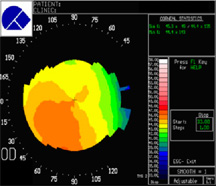
August 2011‧Eye World Evaluating patients for premium IOLs by Enette Ngoei EyeWorld Contributing Editor EyeWorld talks to experts about the extra measures they take when evaluating premium IOL patients Topography scans are common scans used in evaluating patients for IOLs Source: David T.C. Lin, M.D.    Dry eye tests, topography tests, and OCT scans—with high patient expectations of gaining complete spectacle independence following premium lens surgery, detailed pre-op evaluations are needed to ensure optimal outcomes.    Lisa Tsai, M.D., assistant professor, ophthalmology and visual sciences, Washington University School of Medicine, St. Louis, said her pre-op evaluation for premium lens patients closely resembles what she does for patients undergoing LASIK surgery. First, Dr. Tsai conducts a full ocular exam, including an assessment of uncorrected vision at distance and near. "Even if [patients] wear glasses, it's important to document that with...

Evaluating subconjunctival hemorrhage in the refractive era

圖片
August 2011‧Eye World Evaluating subconjunctival hemorrhage in the refractive era by Matt Young EyeWorld Contributing Editor  Subconjunctival hemorrhage (pictured here) can affect post-LASIK patient satisfaction Source: Rick Fraunfelder, M.D.  It may be a minor problem, but it's more significant for patients than some physicians think    Although it's fairly innocuous, subconjunctival hemorrhage continues as an unwanted side effect among patients because of the unflattering eye redness that it causes after eye surgery.    After glaucoma surgery, patients have a lot more to be concerned about than cosmesis. Did the procedure work? Will potential blindness be halted?    But after an elective procedure like LASIK when patients expect superior outcomes, the "wow" effect could be diminished if they have incredible sight but aren't an incredible sight to look at. Patient satisfaction could be diminished after refractive cataract surgery for ...